Archaeological Sites
Cyprus is an open-air museum with a 10,000‑year history.
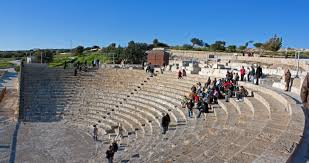
1. Kurion (Kourion / Κούριο)
An ancient cliff‑top city overlooking the sea (not far from Limassol).
- Main sights: The Greco‑Roman theatre (fully restored, seats 3,500 spectators, used for concerts) and the House of Eustolios with mosaics.
- Fact: The city was destroyed by an earthquake in 365 AD.
2. Kato Paphos Archaeological Park
Inscribed on the UNESCO World Heritage List.
Paphos Mosaics (Ψηφιδωτά της Πάφου)
Considered among the finest Roman mosaics in the Eastern Mediterranean.
- Where: House of Dionysos, House of Theseus, House of Aion.
- Themes: Mainly scenes from Greek mythology.
Tombs of the Kings (Τάφοι των Βασιλέων)
A vast necropolis (4th century BC) right by the sea.
- Legend/Fact: Despite the name, no kings were buried here. It was the resting place of the wealthy aristocracy, and they were called “royal” because of their magnificence and Doric columns.

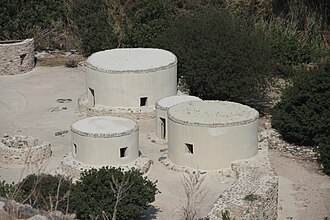
3. Choirokoitia (Χοιροκοιτία)
A Neolithic settlement (7000 BC). Also on the UNESCO list.
- Feature: Round stone houses resembling beehives.
- Where: Along the Nicosia–Limassol highway.
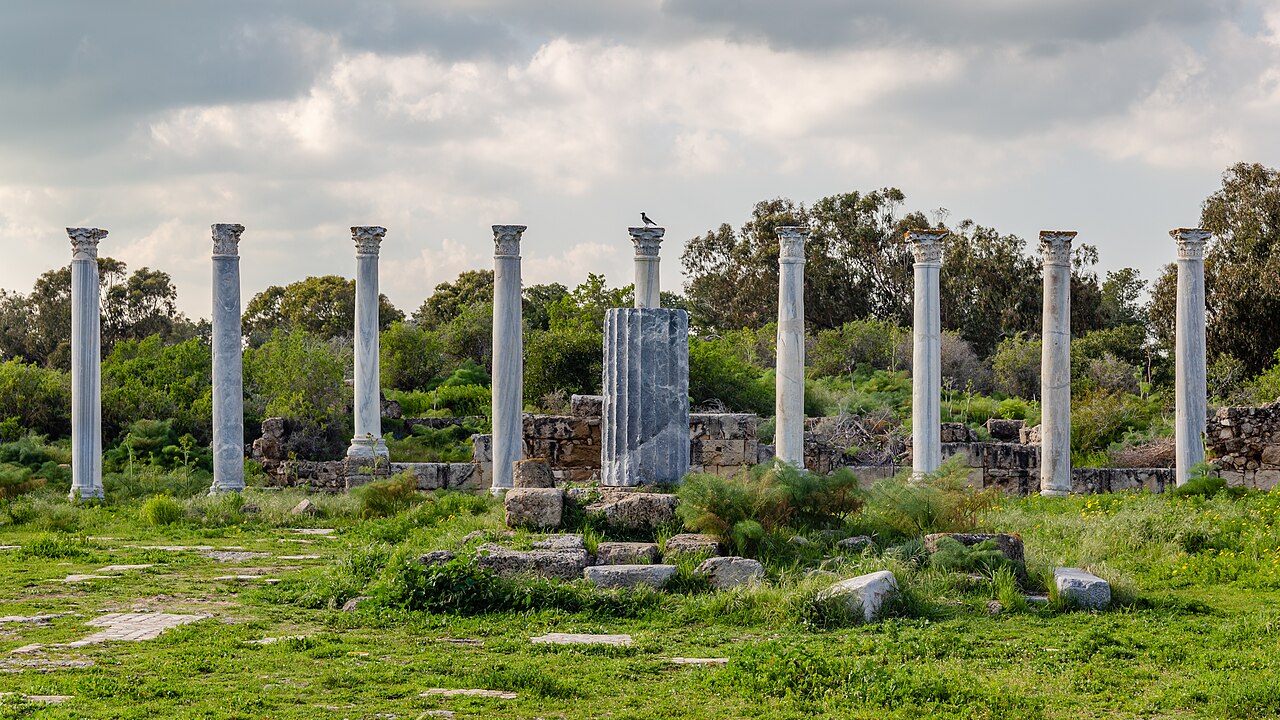
4. Salamis (Salamis / Σαλαμίνα)
The ancient capital of Cyprus for a thousand years. Located in the occupied territory (near Famagusta).
- What survives: Gymnasium with columns, huge theatre, Roman baths.
- Myth: Founded by Teucer, a hero of the Trojan War.
📍 In the exam: Were kings buried in the “Tombs of the Kings”?
Answer: No, it is the burial place of the aristocracy.
📍 In the exam: Which UNESCO sites are located in Paphos?
Answer: The entire archaeological park (mosaics and tombs).